
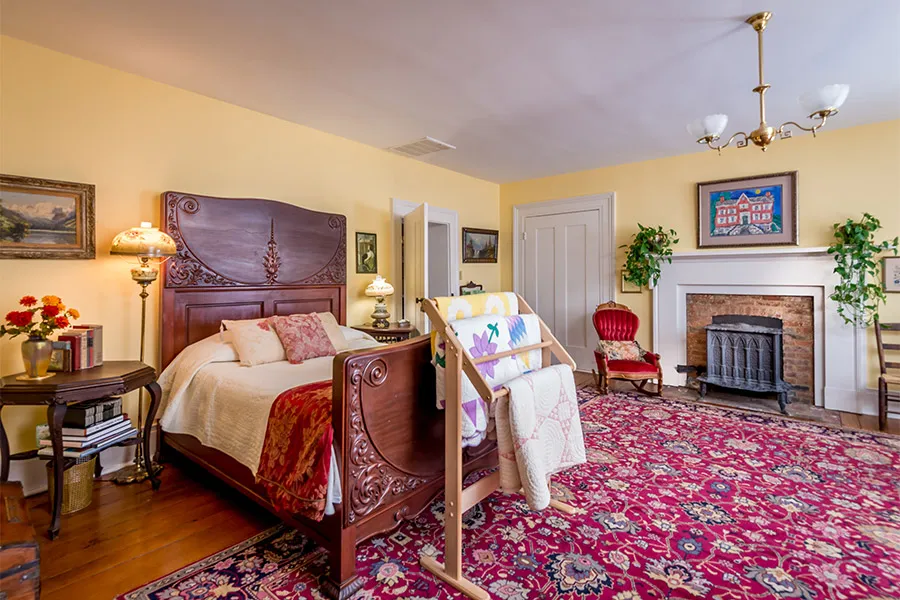
Moving into a piece of Bluegrass history—whether it’s a Federal-style manor in Gratz Park, a craftsman bungalow in Kenwick, or a Victorian in Ashland Park—is a dream. But from a logistics standpoint, these 100-year-old beauties are famous for their “narrow doors and creaky floors.”
At 2 Dudes Moving, we’ve learned that moving into a historic home requires more than just muscle; it requires a surgical approach. Here are our top professional tips for a damage-free transition into Lexington’s oldest neighborhoods.
Tip #1: Master the “L-Hook” for Narrow Entryways
Modern homes usually feature standard 36-inch wide doors, but historic Lexington entryways can be much narrower, often with low-hanging transoms.
-The Strategy: Before moving day, measure the “inner clearance” of every door and tight hallway corner. Don’t just measure width; check the height and diagonal clearance.
-The “Dude” Solution: For sofas and long pieces, we use the “L-Hook” technique—turning the piece vertically and “hooking” it through the doorway in an L-shaped motion. If a piece truly won’t fit, we scout for “The Window Alternative.” Removing a window sash often provides a wider clearance than a 19th-century door frame.
Tip #2: The “Red Carpet” Treatment for Original Hardwoods
Lexington’s historic districts are prized for their original heart pine and oak floors. These floors are softer and more prone to scratching than modern engineered wood.
-The Strategy: Avoid rubber-wheeled dollies, which can trap grit and act like sandpaper on old finishes. Never use plastic sheeting directly on hardwood, as it can trap moisture and damage the historic finish.
-The “Dude” Solution: We use neoprene floor runners and Masonite boards in high-traffic paths. This creates a “hard shell” over your floors so heavy items never actually touch the wood. For heavy furniture, we use furniture sliders to glide items across the floor without friction.
Tip #3: Navigate “Alleyway Logistics” Like a Local
If you’re moving near Transylvania University or the Distillery District, you aren’t dealing with wide suburban driveways. Most of downtown Lexington relies on narrow, historic alleys—some measuring at least 9 miles in total across the city—that were originally designed for horse carriages, not 26-foot moving trucks.
-The Strategy: Scout your “Approach” 48 hours in advance. Many Lexington alleys are “minor streets” with only enough width for single-car access.
-The “Dude” Solution: We often use a “Shuttle Strategy.” We park our large truck in a safe, designated zone and use a smaller, nimble vehicle to “shuttle” your belongings to the home. This avoids blocking traffic on busy streets like Broadway and protects the historic stone walls and iron fences that line our downtown alleys.
Tip #4: The “Ghost of Movers Past” (Leveling the Lean)
Historic homes settle over 100 years, meaning your “flat” floor might have a subtle slant.
-The Strategy: When placing heavy armoires or bookshelves, the “settled” floor can cause them to lean or become unstable.
-The “Dude” Solution: We keep wood shims on hand. As we place your furniture, we help you shim the base immediately so your pieces sit flush and safe against the wall, preventing future stress on the furniture’s joints.